
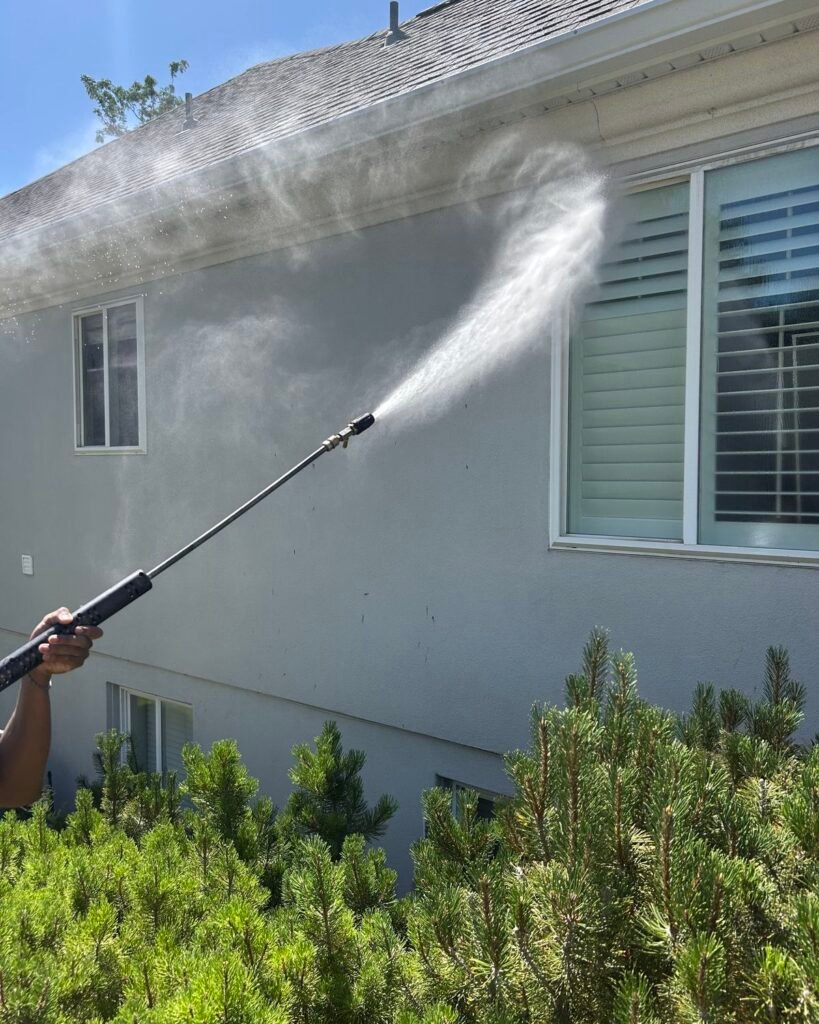
If your driveway, deck, or exterior walls are looking grimy, mossy, or stained, you’ve probably searched “water blasting” and “soft washing” and found both terms used almost interchangeably. They’re not the same thing, and using the wrong one on the wrong surface can do more harm than good — especially on older weatherboard, painted surfaces, or anything with a soft or porous finish.
Here’s a straight answer on the difference, which Hamilton properties need which, and how to avoid an expensive mistake.
What Is Water Blasting?
Water blasting (also called pressure washing) uses high-pressure water to physically strip away dirt, grime, moss, and built-up stains. It’s fast, effective, and the right choice for hard, durable surfaces that can handle the force — think concrete driveways, paved paths, brick, and garage floors.
Best suited to:
- Driveways and concrete paths
- Paved patios and courtyards
- Brick and masonry
- Garage and carpark floors
- Fences and decks (with the pressure adjusted for timber)
What Is Soft Washing?
Soft washing uses low-pressure water combined with specialised cleaning solutions to break down algae, mould, lichen, and grime — without the physical force. It’s the safer option for surfaces that water blasting could damage, crack, or strip.
Best suited to:
- Weatherboard and painted exterior walls
- Roofs (especially older or fragile roofing materials)
- Rendered or plastered surfaces
- Older or heritage properties
- Any surface where high pressure risks stripping paint or forcing water behind cladding
Why This Matters More in Hamilton Than You’d Think
Waikato’s damp, humid climate means moss, mould, and algae build up fast, particularly on shaded driveways, south-facing walls, and roofs under tree cover. It’s tempting to blast everything with the same equipment to get it done in one go, but that’s exactly how homeowners end up with cracked render, stripped paint, or water forced under weatherboard joins — repairs that cost far more than the clean itself.
The right call almost always comes down to the surface, not the level of grime. A heavily mossed driveway and a heavily mossed weatherboard wall need two completely different approaches.
How to Tell Which One Your Property Needs
A quick way to check: if you can scrub the surface with a firm brush without damaging it, it can usually handle water blasting. If the surface is painted, rendered, textured, or older than a decade or two, soft washing is the safer starting point — a professional can always assess and, in some cases, use a combination of both across different areas of the same property.
DIY vs Calling in a Professional
A domestic pressure washer from the hardware store can handle light jobs, but commercial-grade equipment covers more ground faster and, more importantly, comes with the judgment to know when to ease off. We’ve been called out to more than a few Hamilton properties to fix water damage caused by a DIY blast on the wrong surface — it’s a cheap job upfront and an expensive one to undo.
Getting Your Property Ready for Painting
If you’re planning an exterior repaint, the surface prep matters as much as the paint itself. A proper wash, whether that’s water blasting or soft washing depending on the surface, removes the dirt and mould that stop paint from adhering properly and lasting the distance. See our Interior & Exterior Painting page for how we handle prep-to-finish jobs together.
FAQs
Can water blasting damage my driveway or exterior walls? Used on the wrong surface or at the wrong pressure, yes. Concrete and brick handle it well; painted weatherboard, render, and older roofing generally don’t. That’s why matching the method to the surface matters more than just getting the dirt off.
How often should I get my property washed in Hamilton? Most Hamilton properties benefit from an exterior wash once or twice a year, more often for shaded, south-facing, or tree-covered areas where moss builds up faster.
Is soft washing as effective as water blasting? For the surfaces it’s designed for, yes — often more effective, since it treats the mould and algae at the source rather than just stripping the visible layer, which means it tends to come back slower.
Can you do both water blasting and soft washing on the same property? Absolutely, and it’s common. A driveway might need water blasting while the house exterior needs soft washing — we assess each surface on the day rather than using one method for everything.
Get It Done Right the First Time
We assess every surface before we start, so you get water blasting where it’ll hold up and soft washing where it’s needed — no guesswork, no damage. Get in touch for a free quote and we’ll tell you straight which approach your property actually needs.